
Case Study
Live Free Homes
Lavender in a Hard-Hat Industry
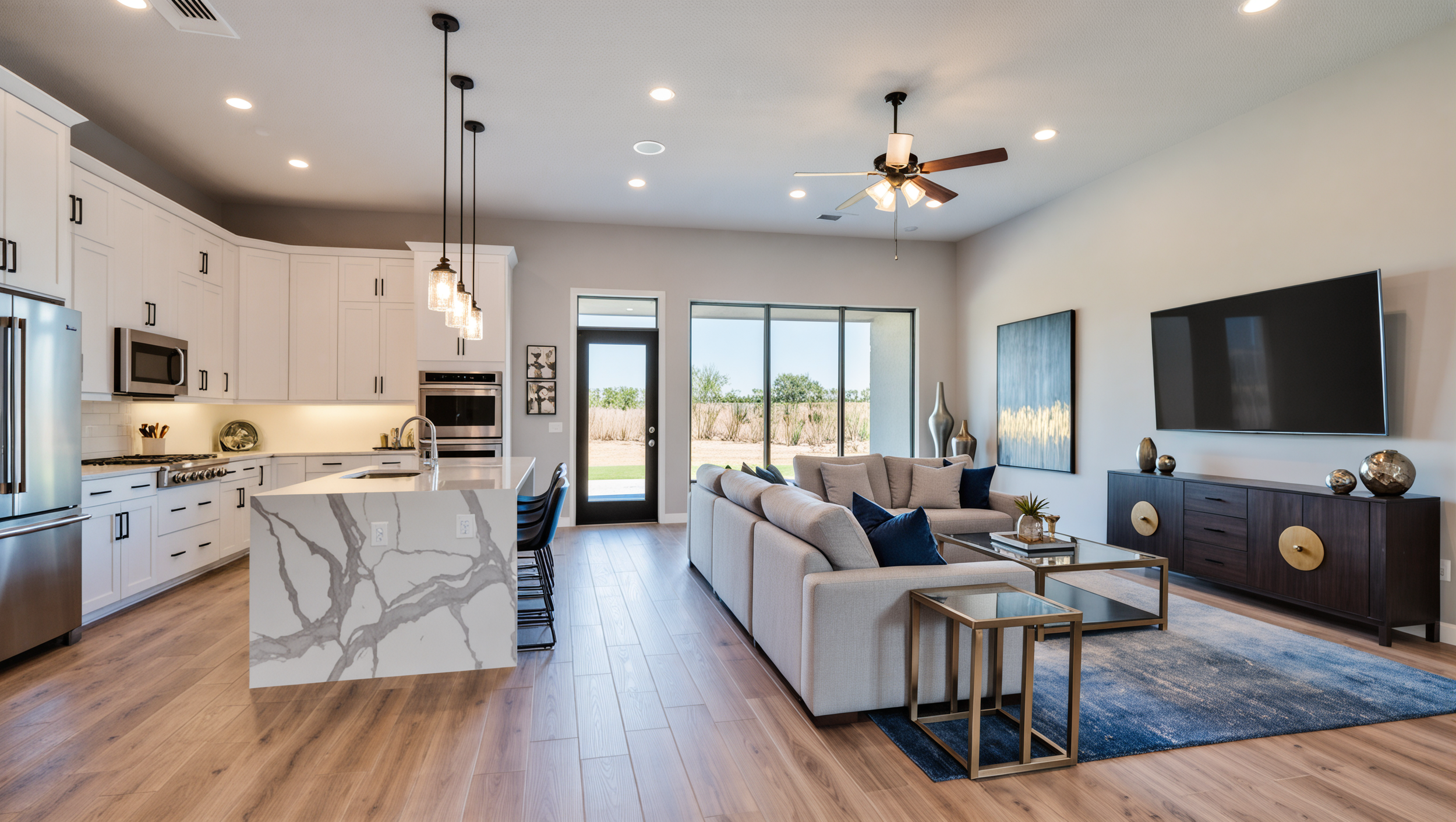
An Industry Judged
The Situation
Chris Dillon knew this firsthand. A general contractor based in New Hampshire, Chris had spent years doing the work that happens after a manufactured or modular home is purchased: site preparation, foundation, installation, customization, finish carpentry, plumbing, electrical, landscaping. The full scope of getting a family from “we bought a home” to “we live here now.” The quality was never the issue. The industry’s reputation was.
When Chris reached out in the summer of 2023, the business was at an inflection point. Originally conceived as a joint venture, he needed a new identity. The initial ask was practical: a professional website and visibility on Google. But the deeper need was something a website alone could not address. Before the world could find Chris, we needed to challenge their assumptions.
Manufactured housing has a perception problem that no single company can solve on its own. Say “mobile home” in conversation and the image that forms is rarely positive. Yet the reality is that manufactured homes are spacious, well-built, and modern homes that offer families a path to ownership in a market that has priced many of them out.
The challenge was not building a brand for a contractor. It was building a brand that asked people to reconsider an entire category.
I was connected to Chris through the simplest possible channel. He had visited a website I built for another client, liked what he saw, followed the credit link in the footer, and reached out through my contact form. No referral, no introduction. Just the work, speaking for itself.
Quality. Calm. Confidence.
Phase One - Listen
The first conversations made one thing clear: this was not a business that needed polish applied to an existing brand. The name, the visual language, the positioning — all of it needed to be built from the ground up.
The strategic challenge had two layers. The first was practical: Chris needed to be found by people searching for manufactured home services in New Hampshire. The second was emotional: the brand needed to signal something the manufactured housing industry almost never communicates. Quality. Calm. Confidence.
Most competitors in this space lean into the expected. Bold construction colors, heavy equipment imagery, hard-hat energy. The opportunity was to go in the opposite direction entirely. Not to hide what the business does, but to present it with enough care and intention that the stigma never enters the room.
A Bet Against Convention
Phase Two - Build
The Naming.
Brand concepts were developed, each approaching the business from a different strategic angle.
One, Oak & Cord, reflected the business’s original partnership structure, drawing on themes of natural strength and durability. The concept was distinctive, but it was built around a relationship that was still forming.
The winner was Live Free Manufactured Homes.
It played off New Hampshire’s state motto, immediately rooting the brand in place while doubling as a statement about what homeownership is supposed to feel like. The dove mark reinforced both: peace, aspiration, the quiet confidence of something well-built. Chris chose it without hesitation.
The name proved prescient. Within a year of launch, the original partnership dissolved and Chris assumed full ownership. The brand held. It had been built around a feeling, not a business structure, and that made it durable enough to survive a foundational change without losing a step.
The Identity.
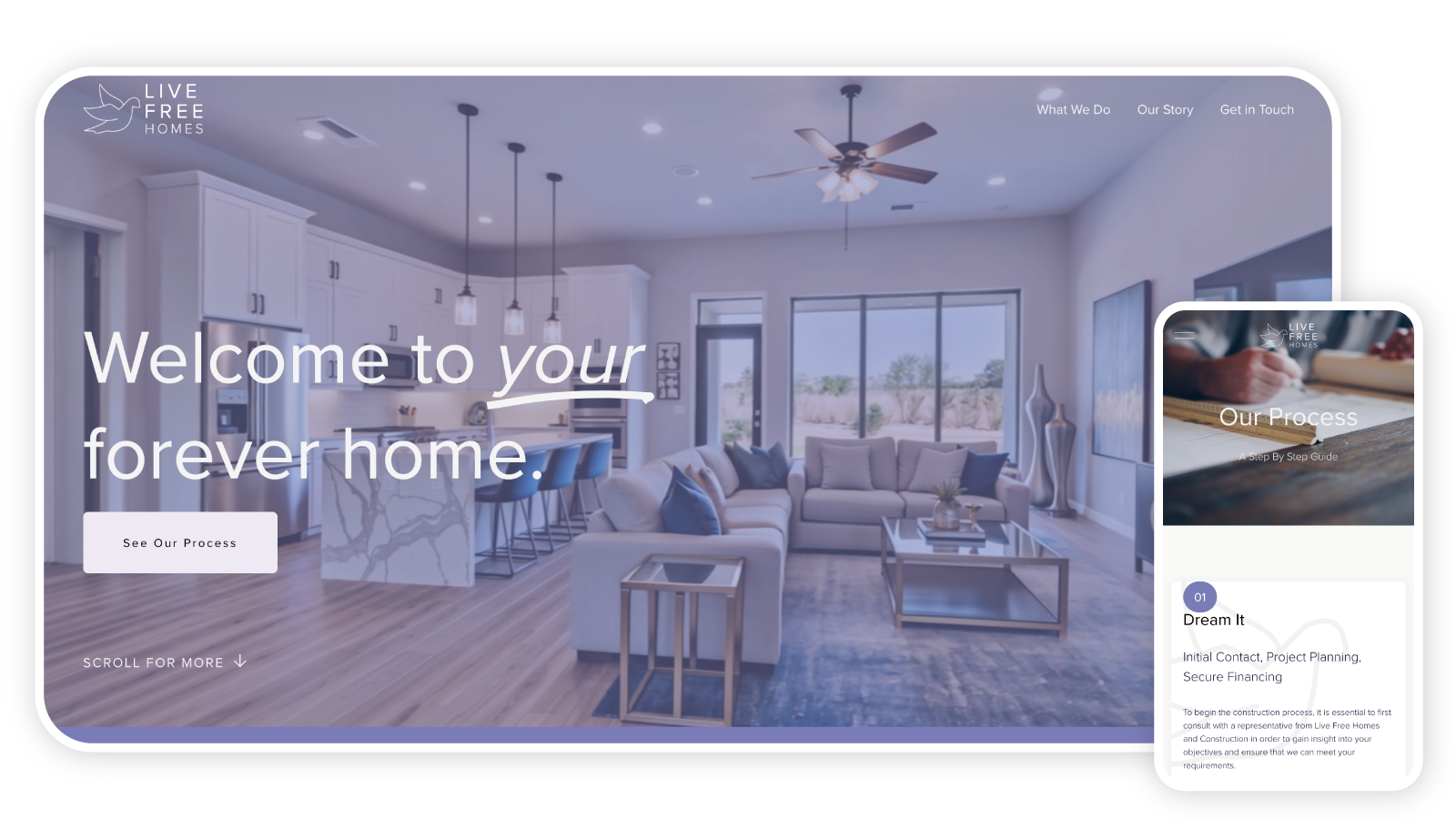
The visual direction was deliberately unconventional for the industry. Where manufactured housing brands typically default to bold primaries and construction-grade aesthetics, I built the palette around a soft lavender: calm, unexpected, and quietly confident. It was not a color anyone in the space was using, which was precisely the point.
The palette was not an accident, nor was it purely aesthetic. Color communicates before copy does, and the question I was designing around was simple: what should someone feel when they first encounter this brand? Not the ruggedness of construction. Not the anxiety of a major financial decision. Comfort. The same feeling the home itself is supposed to deliver. The lavender was the answer, and it did double duty: it signaled calm to prospective homebuyers, and it made Live Free visually impossible to confuse with any competitor in the market.
Paired with clean typography and generous white space, the identity signaled something the manufactured housing market rarely does: sophistication without pretension. The bet was that the right homebuyer would respond to a brand that treated their decision with the same seriousness they were bringing to it. Not loud, not salesy. Present.
The Website.
The site was built on Squarespace with a deliberate design philosophy: white space as a storytelling device. Every layout decision reinforced the core message that these homes are spacious, modern, and comfortable. The UI was kept minimal and clean, letting photography and content carry the weight rather than competing with it.
Navigation was structured around two clear service paths, New Homes and Renovations, with supporting pages for the company’s process, story, and FAQ. The architecture was designed to answer practical questions while reinforcing the brand’s emotional positioning at every turn.
The site has evolved through several iterations since launch. The most significant was the introduction of AI-generated imagery and video on the homepage, which gave the brand a visual presence that would have been cost-prohibitive through traditional production. It was one of the earliest integrations of AI-generated assets into a client’s live site, and it remains a strong demonstration of how modern tools can expand what a small business’s brand is capable of showing the world.
The name itself continued to evolve alongside the site. What launched as Live Free Manufactured Homes was eventually simplified to Live Free Homes. Chris had initially wanted to expand the name to include “and Modular,” but I steered the decision in the opposite direction: drop “Manufactured” entirely. The broader name captured the same audience while opening the door to modular, prefab, and renovation work without requiring a name that inventoried every service. It was the kind of strategic refinement that only becomes possible once a brand has enough equity to absorb the change.
Continuing the Story
Phase Three - Sustain
With the brand and website established, the engagement expanded into digital advertising. Two Google Ads campaigns were launched in early 2025, each targeting a different side of the business. A search campaign captures intent-driven queries from people actively looking for manufactured home services. A performance max campaign uses branded creative assets to reach a broader audience across Google’s display and video network.
The two campaigns serve different strategic purposes: one converts existing demand, the other builds awareness in a market where most competitors are not advertising at all. For a small contractor in a niche industry, the shift from relying entirely on word-of-mouth to actively generating inbound interest represents a fundamental change in how the business grows.
Monthly reporting and ongoing campaign optimization have become part of the working relationship. As the business has grown, so has the investment. The engagement continues as a blend of ongoing support and project-based work: the ads receive regular attention, the site gets periodic updates, and the brand evolves alongside the business.
“Alex, you are very talented. I love it.”
— Chris Dillon, Owner, Live Free HomesVisible, Findable, Credible
What Changed
When comparing page visits from Febuary 2025 to Feburary 2026.
Over a 12 month peroid (February 2025 - February 2026)
Out performed the idustry average (2-3%) by roughly double
The most measurable impact has been in visibility. Website traffic grew steadily throughout the first full year, with monthly visits climbing from roughly 300 in early 2025 to over 1,000 by early 2026. Nearly 8,000 unique visitors found the site in the past twelve months, generating over 21,000 pageviews. A portion of that growth is attributable to increased ad spend, and I will not pretend otherwise. But the trajectory is consistent, the engagement metrics suggest the traffic is qualified, and the trend line continues to climb.
The Google Ads data tells its own story. Over 139,000 impressions and 7,200 clicks in the first year of advertising, with a click-through rate of 5.23% — well above the typical 2–3% range for home services. More telling is the direction: click-through rate climbed from 3.30% in February 2025 to 4.28% in February 2026, a quality signal that holds regardless of budget changes.
The ads are not just reaching more people. They are reaching better ones.
But the numbers only capture part of the picture. What changed more fundamentally was how the business presents itself. A contractor who once had no brand now has one that communicates quality before a single conversation happens. The lavender palette, the dove mark, the deliberate white space: none of it looks like what people expect from a manufactured home company. That was always the point.
The homes were always well-built. Now the brand is, too.
What’s Yours?
This was their story.
Ready To Get Started?